

Maximizing Growth: Benefits of Horticultural Perlite in Commercial Greenhouses
Did you know that expanded perlite is widely used in horticultural applications due to its unique properties, such as lightweight form-factor, water-holding capacity, and neutral pH? This versatile material is found in engineered soils for roof gardens, commercial potting soils, and even as a soilless grow media for hydroponics.
As a commercial greenhouse operator, you’re likely always on the lookout for ways to maximize plant growth and productivity. Horticultural perlite can play a critical role in achieving this goal by improving drainage, aeration, and moisture retention in the soil. Perlite.com offers premium-grade perlite solutions that can enhance the sustainability and productivity of your operations.
Key Takeaways
- Improved drainage and aeration for healthier plant roots
- Enhanced moisture retention for reduced water consumption
- Increased crop yields through optimized growing conditions
- Versatility across various growing applications, including hydroponics and potting soils
- Sustainable growth through the use of natural, pathogen-free perlite
Understanding Horticultural Perlite: Properties and Formation

Close-up of processed horticultural perlite, highlighting its lightweight, porous texture ideal for plant growth.
Understanding the properties of horticultural perlite is key to maximizing its benefits in commercial greenhouses. Horticultural perlite is derived from volcanic glass, which is mined, crushed, and then expanded through a heating process.
What is Horticultural Perlite?
Horticultural perlite is a unique, eco-friendly growing medium. It is created from perlite ore, a dense, glassy volcanic rock that is closely related to pumice. The ore is characterized by its high water content, which allows it to expand when heated.
The Expansion Process: From Volcanic Glass to Growing Medium
The expansion process involves heating the perlite ore to approximately 1,700°F, causing the trapped water molecules to vaporize and expand the material. This transforms the dense volcanic glass into lightweight, porous particles that can expand up to 20 times their original volume. The resulting perlite is sterile, pH neutral, and has a characteristic white color and foam-like internal structure.
The expansion process is crucial for creating the desired properties of horticultural perlite. By controlling the heating process, different grades of perlite can be produced for various applications in commercial greenhouses.
Key Benefits of Horticultural Perlite in Commercial Greenhouse Operations
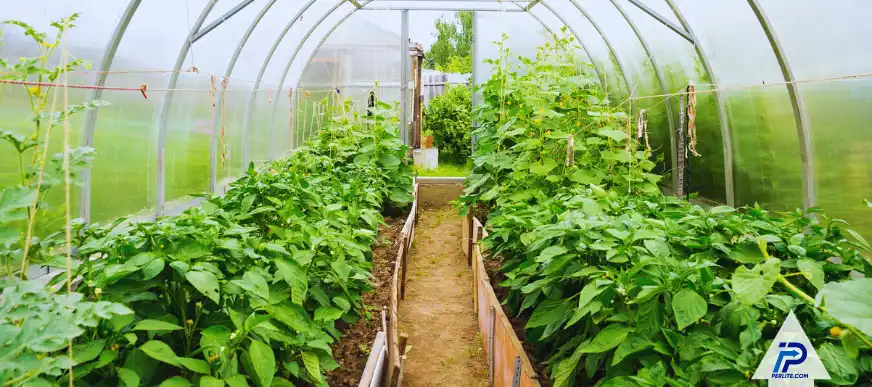
Horticultural perlite used in a commercial greenhouse setting.
When it comes to commercial greenhouse operations, the benefits of horticultural perlite cannot be overstated. By incorporating this versatile and sterile growing medium into their operations, growers can experience significant improvements in crop health and productivity.
Superior Water Management: Retention and Drainage
Horticultural perlite excels at managing water, providing both retention and drainage. This dual capability ensures that plants receive the right amount of moisture without being overwatered, reducing the risk of root rot and other water-related issues. As Perlite.com provides premium-grade perlite solutions with rigorous quality control, you can rely on consistent performance across batches.
Improved Soil Aeration and Root Development
The structure of horticultural perlite allows for excellent aeration, promoting healthy root development. This is crucial for plants to absorb nutrients efficiently. As a result, your crops will benefit from improved growth rates and increased yields. According to the University of Idaho’s Seed Potato Program, switching to sterile perlite after losing crops to soil pathogens in other media led to great success.
Sterility and pH Neutrality: Disease Prevention and Versatility
Horticultural perlite is naturally sterile and has a pH neutral (7.0) characteristic, making it an ideal growing medium for a wide range of crops. This sterility prevents the introduction of disease-causing pathogens, while its pH neutrality allows for versatility across different crop requirements. As a result, you can rely on horticultural perlite to provide a disease-free starting point for your crops, supporting more sustainable greenhouse practices.
By using horticultural perlite, you can also eliminate the need for chemical sterilization or fumigation of growing media, further enhancing the sustainability of your operations. With its inert chemical nature, perlite won’t deplete nutrient levels in the soil, ensuring that your fertilizer programs work as intended.
Practical Applications of Horticultural Perlite in Commercial Settings

Horticultural perlite supporting seedling growth in a commercial setting for healthy plants.
The use of horticultural perlite in commercial greenhouses offers numerous benefits and opportunities for growth. Horticultural perlite is a versatile and effective growing medium that can be used in various applications, from soilless media for hydroponic systems to a component in potting soil mixes.
Soilless Media for Hydroponic Systems
Horticultural perlite is an excellent choice for hydroponic systems due to its sterility, pH neutrality, and ability to retain and drain water effectively. It provides a disease-free environment that is critical for successful crop production. Perlite’s balanced moisture retention and aeration properties create an optimal environment for root development in hydroponic systems.
Potting Soil Component: Optimal Mixing Ratios
When used as a component in potting soil mixes, horticultural perlite improves soil aeration, structure, and water management. The optimal mixing ratio can vary depending on the specific application, but generally, a mix of 10-30% perlite with other ingredients like peat moss or coconut coir is recommended. This ratio helps to prevent waterlogging and ensures healthy root growth.
Specialized Applications: Propagation and Seed Starting
Horticultural perlite is particularly beneficial for seed starting and plant propagation due to its sterility and ability to provide a well-aerated environment. The University of Idaho’s Seed Potato Program successfully used perlite for nuclear seed potato production after experiencing losses with other media. Perlite’s disease-free environment and optimal moisture retention properties made it an ideal choice for this application.
Different horticultural grades of perlite can be used for specific propagation applications, including seed starting, cutting propagation, and tissue culture transplanting. By selecting the appropriate grade of perlite, growers can optimize their propagation techniques and improve crop yields.
Sustainable Growth with Premium Perlite Solutions

Young seedlings in trays with perlite, showcasing a practical application in commercial horticulture.
In summary, horticultural perlite stands out as a superior growing medium for commercial greenhouses, enhancing both productivity and sustainability. By improving drainage and aeration, perlite creates an optimal growing environment. Its versatility is evident in various applications, from hydroponic systems to potting soil components.
The sustainability of perlite is underscored by its minimal environmental impact during mining and processing. As a naturally occurring material, perlite is an eco-friendly choice for commercial growers. Premium horticultural grade perlite from Perlite.com ensures consistent performance, maximizing productivity and crop quality.
For customized perlite solutions tailored to your specific commercial greenhouse needs, contact Perlite.com at sales@perlite.com or 1 888-656-3313. Perlite.com is committed to innovation, quality, and sustainability, empowering growers to achieve optimal results with their premium perlite products.
Horticultural Perlite FAQs: Mixing Ratios, Benefits, and Growing Applications
1. What is the ideal mix ratio of Perlite to other growing media for optimal plant growth?
The ideal mix ratio varies depending on the specific application, but a general guideline is to mix 10-30% Perlite with 70-90% other growing media, such as peat moss or compost, to achieve optimal drainage and aeration.
2. How does Perlite improve soil structure and prevent compaction?
Perlite improves soil structure by increasing pore space, allowing for better water and air penetration, and reducing compaction by creating a more porous and stable environment for root growth.
3. Can Perlite be used in hydroponic systems?
Yes, Perlite is often used as a growing medium in hydroponic systems due to its ability to retain nutrients and provide good aeration to the roots.
4. How does the pH neutrality of Perlite benefit plant growth?
The pH neutrality of Perlite ensures that it won’t affect the pH of the surrounding soil or growing media, allowing for more precise control over nutrient availability and uptake.
5. Is Perlite sterile and free of diseases?
Yes, Perlite is sterile and free of diseases, making it an ideal component for seed starting and propagation applications where disease prevention is critical.
6. How does Perlite affect water retention and drainage in potting soils?
Perlite improves water retention by allowing soils to hold more water without becoming waterlogged, while also enhancing drainage by providing a porous structure for excess water to drain through.